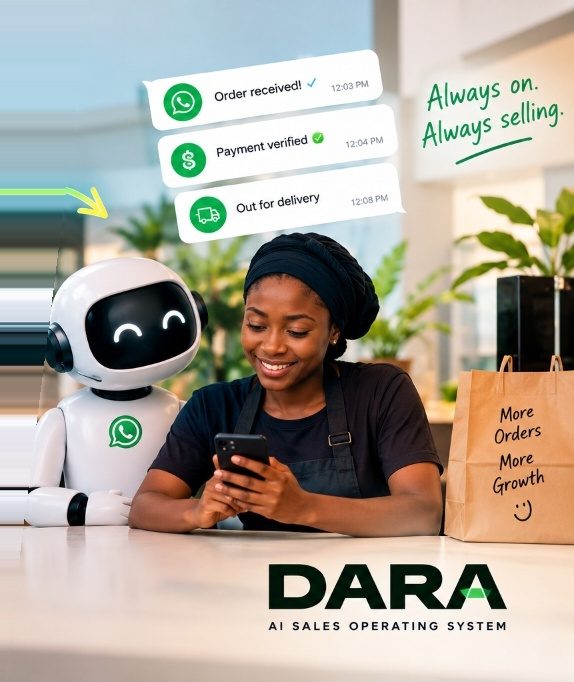

A customer doesn't care how sophisticated your technology is. They care about whether you answered their question, helped them make a decision and made it easy to buy.
Imagine this.
A customer sees your product on Instagram.
They like it.
They click your WhatsApp number.
And they send:
A few seconds later, the customer receives:
1. Sales
2. Customer Service
3. Speak to an Agent
The customer clicks 1.
Another menu appears.
They click again.
Another question.
Another menu.
At some point, the customer stops thinking about buying your product and starts thinking about how to escape the conversation.
And just like that, a potential sale becomes a missed opportunity.
This is where the difference between a traditional chatbot and an AI Sales Agent becomes important. Because both may appear to “automate WhatsApp.” But they are not designed to do the same thing.
THE OLD WAY: “PRESS 1 FOR SALES”
Traditional chatbots were built around a simple idea: Predict what the customer will ask and create a button for it.
So you build a flow:
Welcome → Choose Product → Choose Size → Choose Location → Confirm Order → Payment
It works reasonably well when the customer follows the path you designed.
But customers rarely behave like flowcharts.
A real customer might say:
That's not six separate questions. It's one conversation.
A traditional rule-based bot may not know what to do with it because the customer's message doesn't fit neatly into the decision tree.
And that is the fundamental weakness of the traditional chatbot: It expects the customer to understand the system.
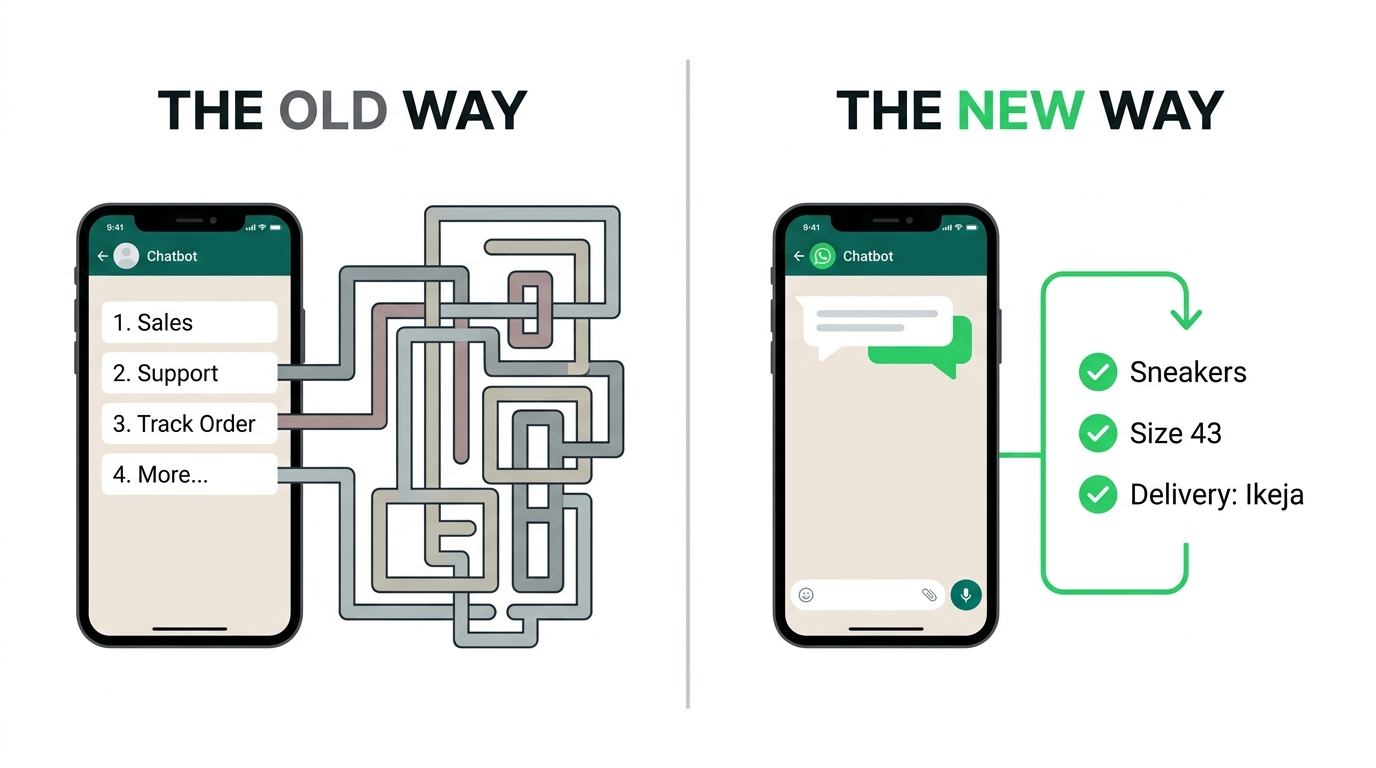
THE NEW WAY: LET THE CUSTOMER TALK LIKE A CUSTOMER
An AI Sales Agent starts from a different premise: The customer shouldn't have to learn how to talk to the machine. The machine should understand how the customer naturally communicates.
Instead of forcing someone through a series of menus, an AI agent can interpret a message, identify what the customer wants and continue the conversation.
For example:
The important information is already inside that sentence:
- Two sneakers
- White
- Size 43
- One black belt
- Delivery to Ikeja
The customer didn't fill six forms. They simply talked.
That's the fundamental shift from a chatbot to an AI sales agent.
SO WHAT DOES DARA ACTUALLY DO?
Live Production Proof: Built for Real Commerce
How DARA operates in production, automated WhatsApp payment alerts and live merchant dashboard.
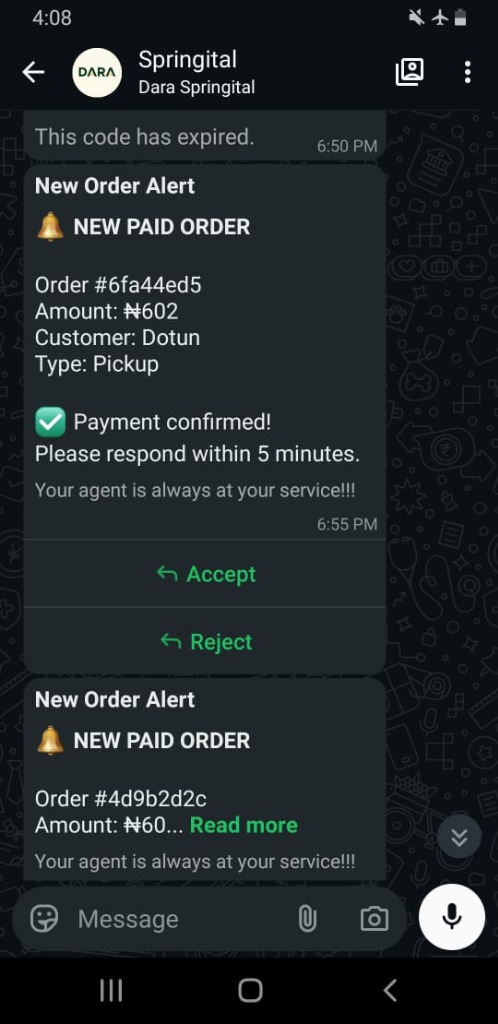
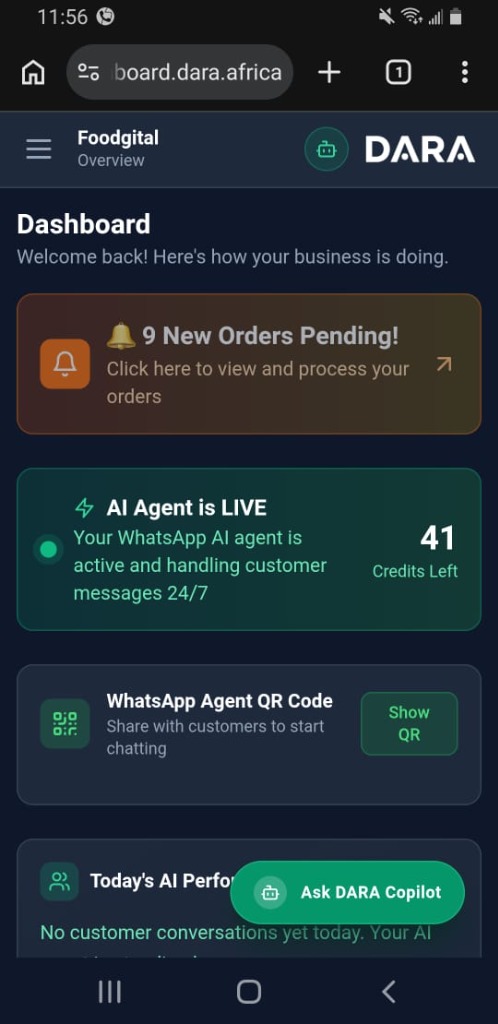
DARA is designed as a 24/7 WhatsApp AI Sales Agent for businesses.
According to the current DARA platform, the agent can respond to customer enquiries in about 3 seconds, answer questions, handle objections, take orders and coordinate payment collections.
But speed is only one part of the story. The more interesting part is what happens inside the conversation.
A customer might ask about a product.
Then change their mind.
Then ask about another product.
Then ask about delivery.
Then object to the price.
Then finally decide to buy.
A useful sales system needs to follow that conversation rather than forcing the customer back to the beginning every time they ask something unexpected. That's where AI-powered conversational selling becomes different.
FROM “ANSWERING QUESTIONS” TO ACTUALLY SELLING
There is an important distinction between customer support automation and sales automation.
A basic chatbot might answer: “What are your opening hours?”
An AI Sales Agent should be able to participate in a much larger commercial journey.
For example:
At this point, the conversation has moved from information to intent.
And that is where commerce begins.
DARA's platform is designed around this idea helping businesses move from customer conversations toward orders and payments rather than simply answering FAQs.
THE REAL TEST: WHAT HAPPENS WHEN YOU ARE NOT ONLINE?
This is perhaps the simplest way to understand the problem.
You receive a WhatsApp message at 10:47 p.m.
You're asleep.
Your staff member is offline.
The customer is ready to buy.
By morning, that customer may have already purchased somewhere else.
DARA's proposition is built around removing that waiting period. The platform describes its AI Sales Agent as operating 24/7, responding in about 3 seconds, taking orders and helping coordinate payments even when the business owner is unavailable.
That changes the question from: “How quickly can my staff reply?” to: “How quickly can my business respond?”
Those are two very different questions.
BUT CAN IT ACTUALLY HANDLE A REAL BUSINESS?
This is where implementation matters.
An AI agent is only useful if it understands your business:
- Your products
- Your prices
- Your menu
- Your services
- Your business tone
- Your ordering process
DARA's setup is designed around this. Business owners provide their business information and upload their products, menus, prices and bank details through the vendor dashboard. DARA says the custom agent can then be configured and brought live on WhatsApp in 48 hours or less for most businesses.
So the idea isn't to give every business the exact same generic bot. It is to configure an AI sales assistant around the business.
WHO IS THIS FOR?
The interesting thing about conversational commerce is that it isn't limited to fashion brands or online stores. DARA currently positions its platform for several categories, including:
🍔 Food & QSR
Restaurants, cloud kitchens, bakeries, cafés and similar businesses can use it for ordering and customer interactions.
🛍️ Retail & Commerce
Fashion, beauty, electronics, supermarkets and other product businesses can use catalog search and automated checkout.
💼 Professional Services
Consultants, agencies, salons, photographers, real estate businesses and other service providers can use automated booking and client intake.
🏛️ Other Organisations
Civic organisations, public figures and religious/faith organisations, including constituency casework, citizen services, giving and event RSVPs.
The common denominator is simple: There are people asking questions, and the business needs to respond.
WHAT ABOUT THE COST?
This is where the difference between a promising technology and a practical business tool becomes important.
DARA's current pricing model is based on credits rather than a fixed monthly subscription. New users receive 100 free signup credits. After that, businesses can recharge starting from:
DARA currently states that there are no setup fees or monthly contracts and that businesses pay for the conversations they use. That means the cost structure is usage-based rather than another fixed monthly software bill.
For a business owner, that distinction matters. You are not simply paying for a piece of software sitting in the background. The idea is to pay according to the conversations your business is actually having.
AND WHAT ABOUT THE HUMAN STAFF?
This is where the conversation around AI often becomes unnecessarily dramatic.
The question isn't always: “Will AI replace my sales team?”
Sometimes the better question is: “Which parts of my sales process should humans stop doing manually?”
If a staff member spends hours answering:
- “How much is this?”
- “Is this available?”
- “What colours do you have?”
- “Do you deliver to Abuja?”
- “How do I pay?”
- “What time do you close?”
then an AI agent may be able to handle much of that repetitive communication. That gives the human team more room to deal with the conversations that genuinely require human judgment.
DARA's own FAQ also states that complex issues can be escalated or handed off to human support.
So the more realistic future isn't necessarily AI versus humans. It is increasingly: AI for scale. Humans for judgment.
THE NUMBERS TELL AN INTERESTING STORY
DARA currently highlights several business outcomes on its platform.
These are customer testimonials presented by DARA, not independently audited performance studies. But they illustrate the type of business problem the product is attempting to solve: response time, conversation volume and sales follow-through.
And that may be the most important point. The technology doesn't create demand out of thin air. It attempts to make sure that when demand arrives, the business is ready to respond.
THE BIGGER SHIFT: WHATSAPP IS NO LONGER JUST A CHAT APP
For many African businesses, WhatsApp is already where the customer relationship begins.
The customer discovers the brand elsewhere.
Then they come to WhatsApp to ask questions.
They negotiate.
They request pictures.
They confirm availability.
They discuss delivery.
And eventually, they pay.
So the conversation is already part of the sales funnel. The question is what happens when that conversation becomes intelligent enough to handle much of the journey automatically.
That's where conversational commerce begins to look less like a chatbot feature and more like business infrastructure.
THE DIFFERENCE IN ONE SENTENCE
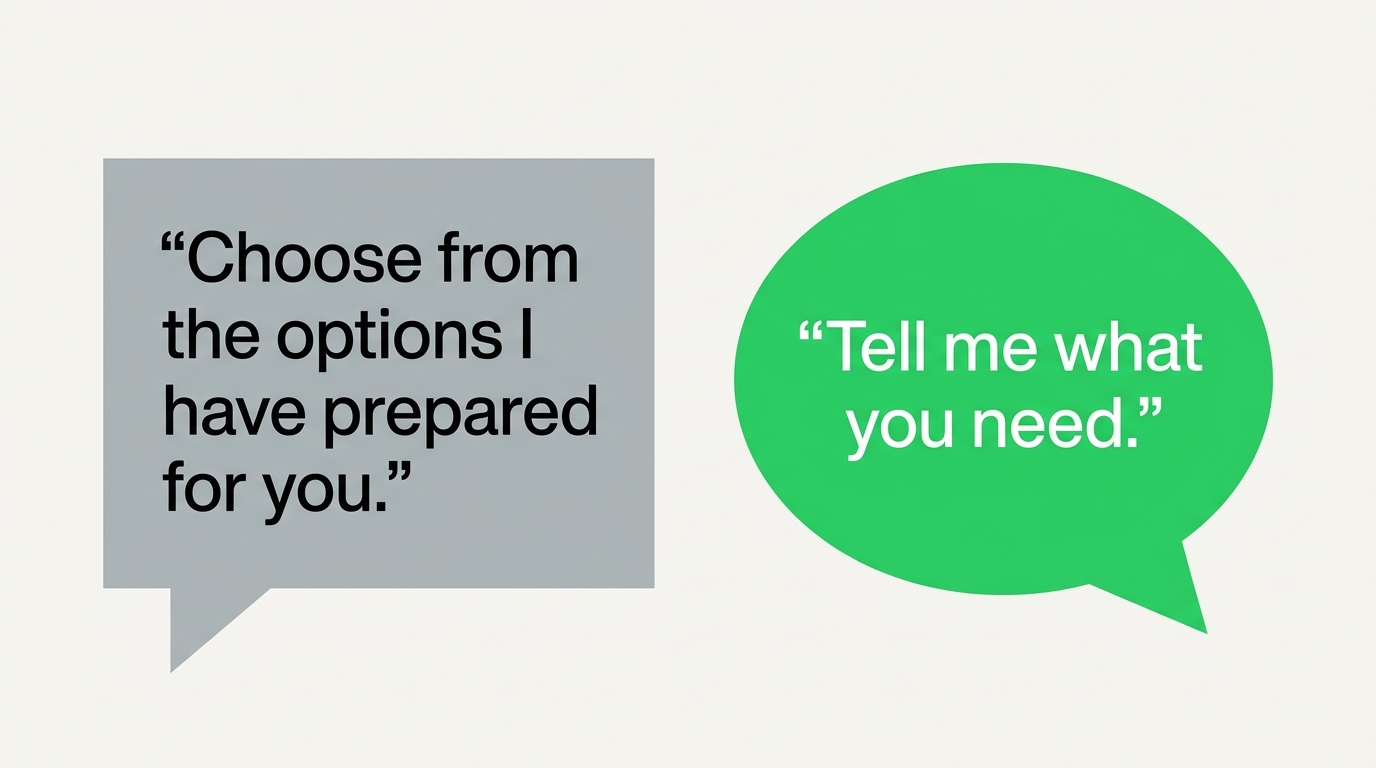
A traditional chatbot says: “Choose from the options I have prepared for you.”
An AI Sales Agent says: “Tell me what you need.”
That sounds like a small difference. It isn't.
One is built around the limitations of the system. The other is built around the behaviour of the customer. And in commerce, the customer usually wins.
SO, WHICH ONE SHOULD A BUSINESS USE?
The answer depends on what the business actually needs.
If your customers mainly need simple answers and your workflows are highly predictable, a traditional chatbot may still be useful.
But if customers ask questions in different ways, combine multiple requests, change their minds, negotiate, ask follow-up questions and expect a conversation before buying, a more intelligent AI Sales Agent can offer a fundamentally different experience.
DARA is betting on the latter. Its model is built around a simple idea: Don't make customers learn your system. Build a system that understands your customers.
And that may be where WhatsApp commerce is heading. Not toward more buttons. Not toward longer menus. But toward conversations that can actually move somewhere.
From: “Hello, how much?” to: “Yes, I'll take it.”
And in the end, that's the conversation every business wants to have.
What Else Your DARA Account Now Unlocks out of the Box
Every business onboarding on DARA now gets our complete 2026 growth and conversion stack with 100 free welcome credits:
- Plain-English & Voice-Note Context AI: Buyers can type multiple answers in one message, ask natural questions in English or Pidgin, or send voice notes, and DARA understands the full context without restarting the chat.
- AI Image & Commercial Flyer Studio: Generate studio product graphics, promotional sale posters, and Virtual Fashion Model Try-Ons in 60 seconds inside your dashboard.
- Viral Meme & Video Studio: Put your brand or face into trending football (Mesut Ozil, Enzo Fernandez), global Tech CEO, and Nigerian meme videos, GIFs, and images to stop the scroll and flood your WhatsApp.
- Meta Click-to-WhatsApp (CTWA) Ads & Bucket CRM: Greet Instagram and Facebook ad clicks in 1.2 seconds, score leads into Hot, Warm, and Pending Payment buckets, and retarget them with 1-click broadcasts.
- Live DARA ROI Calculator on WhatsApp: Chat with our onboarding agent on WhatsApp (+234 814 649 8446) to calculate your exact monthly savings and recoverable revenue in 60 seconds.
Calculate Your Exact WhatsApp ROI & Launch in Under 4 Hours
See how much monthly revenue your business can recover with 1.2-second Plain-English WhatsApp AI, AI Creative Studio flyers, Viral Video Memes, and automated Paystack/OPay checkout.